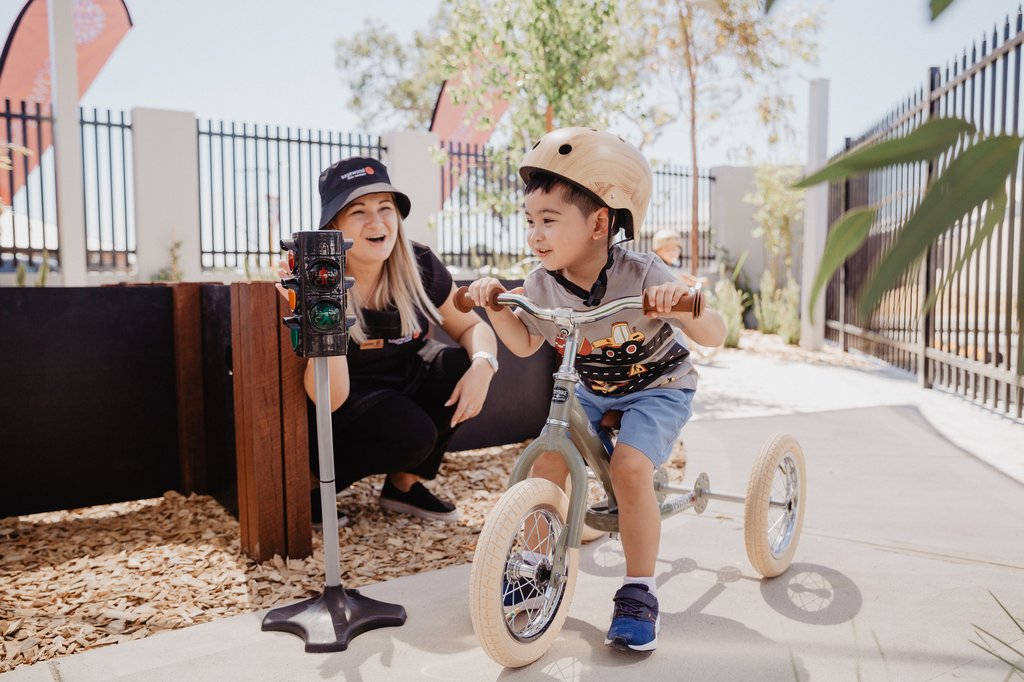
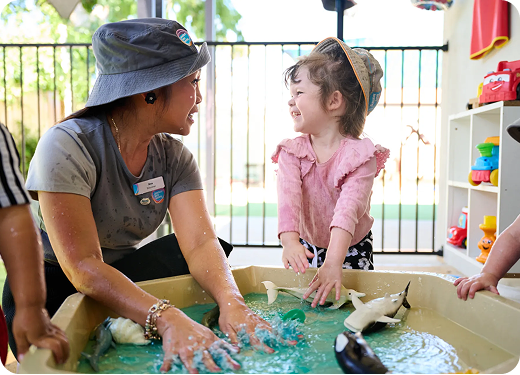
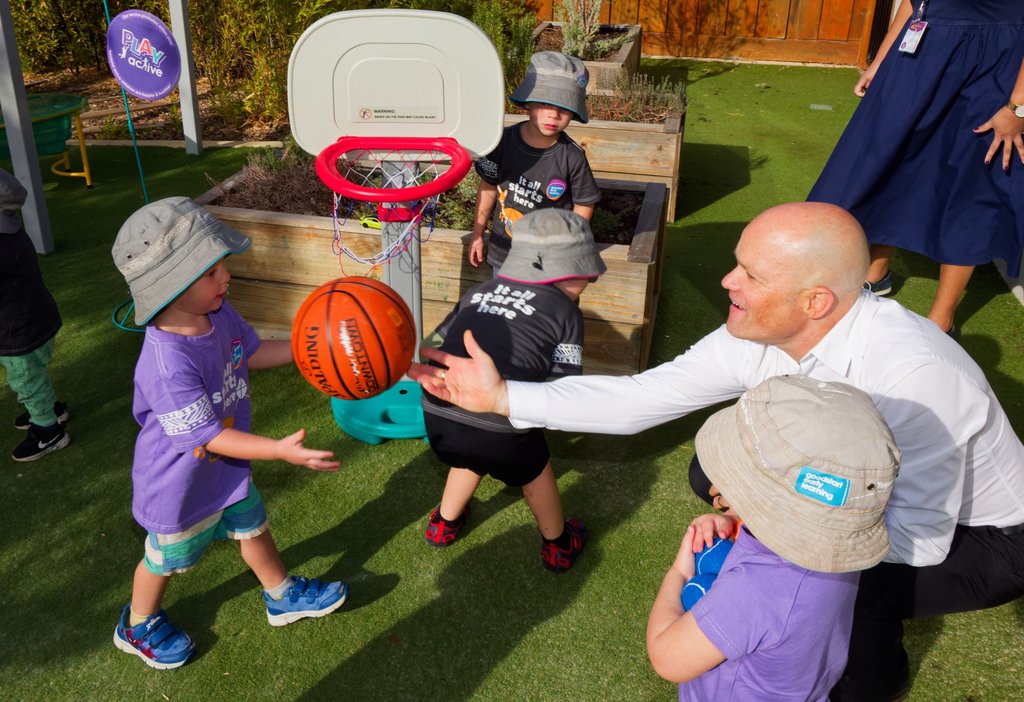
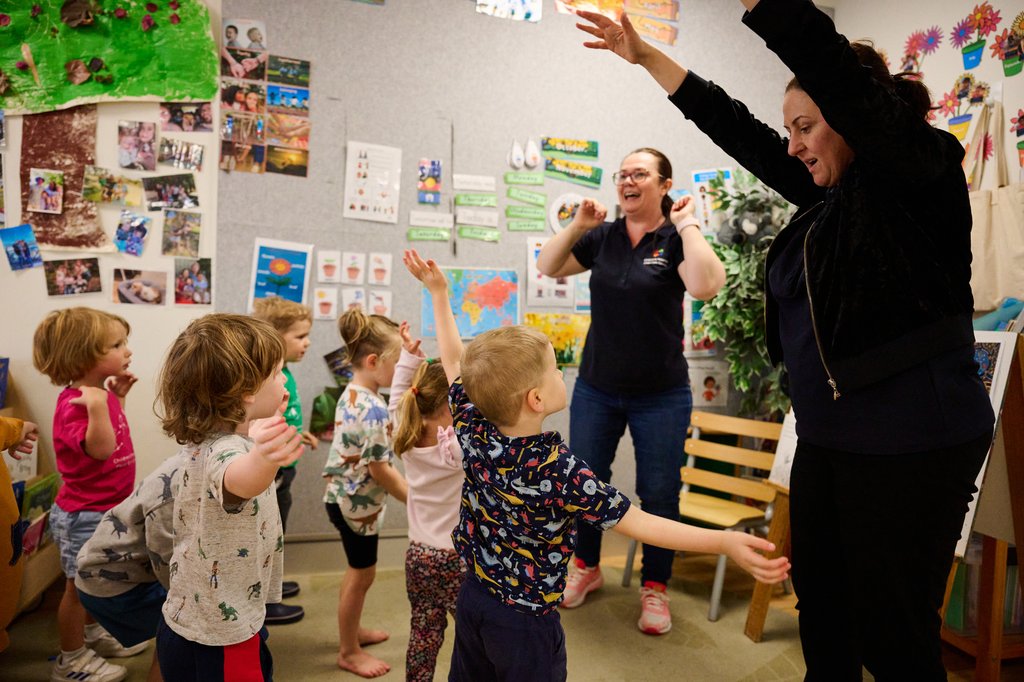
Sagewood Early Learning run seven services in Perth, WA. They fully integrate Play Active into their program, with Professional Development embedded into their onboarding process.
Let's hear more from Sagewood staff about their experiences with Play Active.
Have you noticed any changes in children’s behaviour, engagement, or connection since increasing active play?
Yes, we have noticed many positive changes. Many children are now demonstrating growing resistance, improvement in coordination and confidence in trying new physical challenges. Our Play Active approach, alongside our Montessori principles supports our children to move their bodies when they need to and work in a manner which meet their individual needs which increases concentration, emotional regulation and overall wellbeing.
I have noticed that increasing active play has supported positive behaviours and interactions, especially with our group of boisterous boys, who really benefit from having a dedicated outlet to channel their energy. When children are engaged in active play or group activities, we have less incidents and behaviour forms.
Movement and heavy work are now embedded as a consistent and proactive part of the daily rhythm. Educators intentionally incorporate carrying, pushing, lifting, climbing, and other functional movement experiences.
In your experience, why is energetic play essential - not optional - for child safety?
- Energetic play allows children to test their own physical boundaries and teaches them to navigate safe risks and to understand their own limits which will help build their own self confidence and accountability.
- Supports sensory regulation and reduces escalation of challenging behaviours.
- Helps children meet their natural movement and proprioceptive needs in safe, structured ways.
- Improves focus, attention, and emotional regulation.
- Reduces risk-taking behaviours caused by sensory seeking or dysregulation.
- Strengthens body awareness, coordination, and physical safety skills.
- Supports positive behaviour by preventing overload rather than reacting to it.
- Enhanced engagement, reducing wandering and unsafe, unstructured movement.
How does active play support children’s wellbeing and their safety in your service?
Through active play experiences the children are able to build confidence in themselves and their bodies, further develop coordination, strengthen friendships, and learn how to safely take risks within a supported environment. With educators guiding the children’s active play this also supports the children to build body awareness, understand boundaries, and develop the confidence and independence to engage safety whilst still exploring the environment.
The program has encouraged the educators to become more intentional and actively engaged rather than just simply observing. Children are drawn to the activities which support more children in direct supervision (less children roaming). It has helped create a proactive approach to safety checks and environment set ups.
Group movement activities have helped children who usually play alone feel more confident joining peers, building social skills, cooperation, and a sense of belonging through fun and inclusive active play experiences.
How do families respond when they see educators actively engaged in play?
Every day, we receive positive feedback from families noting how engaging the experiences look and highlighting the strong, secure relationships our educators share with the children. This visibility reassures families that our team is deeply present and actively involved in their child’s learning and development, rather than just supervising, fostering a strong sense of security and trust.
How does Play Active help ensure children are more visible and included during play?
Play Active supports intentionally planned group-based activities, bringing children together. Group play also supports our educators to maintain active supervision more effectively, as many children are more visible and engaged within the environment.
The Play active program has sparked inspiration and provides ideas of other physical-based activities that can be implemented to boost Educator to Child and Child to Child engagement and relationships.
What tools, training, or strategies from Play Active have been most useful?
The superhero belt research study this allowed and encouraged families to be and get involved in their own child’s physical activities this is also in line with our physical activity policy.
We love the resource guide that is available in our Play Active portal. It has extensive information, ideas, links for further training. We used this to set challenges for our families on StoryPark and encourage engagement.
Some of the most useful Play Active strategies have been incorporating intentional movement experiences, short bursts of physical activity, and using outdoor environments to support children’s wellbeing, confidence, and overall development. Move it Mondays are a favourite amongst the educators as it provides out of the box physical play ideas for all ages.
If another service asked about Play Active, what would you say about its impact on safety and supervision?
I would describe it as having a positive and strengthening impact on both safety and supervision practices. It provides educators with clear ideas and strategies to embed active play meaningfully into the program, which results in higher levels of engagement and more purposeful supervision.
When educators are actively participating in Play Active experiences alongside children, they are not only facilitating learning but also modelling safe, positive movement and interaction. This shared engagement naturally strengthens supervision, as educators are more attuned, responsive, intentional and present within the play environment.
When I go out on the floor to cover an educator I will often get involved in active play to draw the children in. This creates excitement in the environment as I'm showing an interest in what the children are doing. This has assisted when I noted a few rowdy children doing some unsafe behaviours, I've been able to capture their attention and shift them to something that is safer or even helps me in completing a task.